

The printing unit of stacked flexo printing machine is stacked up and down, Arranged on one or both sides of the main wall panel of the printed parts, Each printing color group is driven by gears mounted on the main wall panel. When printing, the substrate passes through each printing color unit in turn, Complete all printing. Each printing color group has an impression cylinder, Plate cylinder, and inking device, And the structure of each printing color group is the same. The stacked flexographic printing machine can print 1-8 colors, But mostly 6 colors. If equipped with a reversing device, it can also print on both sides.
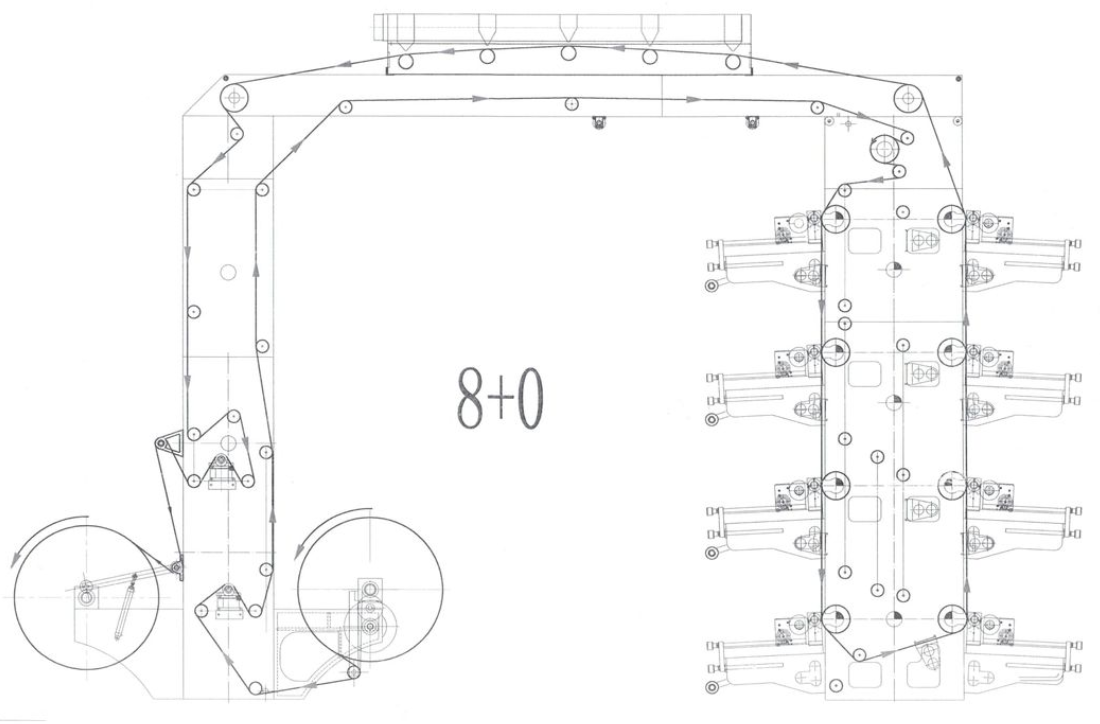
Main Features of Stack Type Flexographic Printing Machines
Flexible Configuration: You can adjust print station counts, web width and extra features to fit what your production really needs.
Versatile Material Compatibility: With proper machine setup, this press handles plastic films, paper, non-wovens and PP woven materials without issues.
Double Sided Printing: Add-on web reversing hardware lets you complete print jobs on both sides of your substrate.
Convenient Operation and Maintenance: Its vertical print-unit layout saves floor space. Operators can get quick access to every station for tweaks and routine servicing.
Wide Range of Applications: It works great for flexible packaging, shopping bags, food packs, tissue wrapping, non-woven items and woven sacks.
Stack Type Flexographic Printing Machine for Plastic Film
Applicable materials: PE, LDPE, HDPE, PP, BOPP, BOPET, CPP and other compatible plastic films. Stack type flexographic printing machine are widely used to print plastic films for flexible packaging and bag making. Proper tension management, drying setups and ink choices let this machine handle many film substrates, covering food packs, shopping bags, waste bags and industrial packaging. You pick the configuration based on film grade, thickness, print width, colour count and target running speed. Add corona treatment, automatic register tracking or double-sided printing if your job needs them.
Typical Technical Specifications for Plastic Film Printing
|
Parameter |
Typical Configuration |
|
Printing materials |
PE, LDPE, HDPE, PP, BOPP, BOPET, CPP |
|
Film thickness |
Roughly 10–150 μm, varies by material and machine setup |
|
Printing colors |
2–10 colors, depends on model |
|
Maximum printing speed |
Up to 200 m/min for qualified setups |
|
Printing registration accuracy |
Around ±0.15 mm under proper operating conditions |
|
Printing mode |
Single-sided or double-sided |
|
Optional equipment |
Corona treater, automatic register control, dual unwinder/rewinder, inspection system |

Stack Type Flexographic Printing Machine for Paper
Applicable materials: Kraft paper, coated paper and other workable paper stocks. This Stack type flexographic printing machine can be set up for paper packaging that calls for flexible runs and multi-colour graphics. It suits paper used for shopping bags, food paper sacks and takeaway packaging. Configure the unit around paper grammage, web width, colour count and ink type. Well-matched dryers and tension systems keep paper feeding steady and hold reliable print quality through runs. Typical applications include:
●Kraft paper shopping bags
●Food paper sacks and takeaway packaging
●Daily goods paper packaging
●Other custom printed paper packaging

Stack Type Flexographic Printing Machine for Nonwoven Fabric
Applicable materials: PP nonwoven fabric and other compatible nonwoven substrates. These Stack flexographic printing machine also print nonwovens for bags and disposable goods. The build needs to account for the lightweight, porous surface and unique tension demands of nonwovens, to keep feeding stable and prints even. Typical applications include:
● Nonwoven shopping bags
● Promotional and reusable bags
● Hygiene and household product packaging
● Other printed nonwoven items
Stack Flexographic Printing Machine for PP Woven Bags
Applicable materials: PP woven fabric and other compatible woven substrates. For PP woven material, Stack flexographic printing machine can print logos, product details and multi-colour artwork on woven sack stock. Proper web guiding, tension control and ink selection adapt to the textured surface of woven material. Typical applications include:
● Rice and flour sacks
● Fertilizer and feed bags
● Chemical packaging sacks
● Agricultural and industrial woven bags

Choose the Right Stack Flexographic Printing Machine
Different substrates demand different machine setups. When you select a Stack type flexographic printing machine, think about material type, substrate thickness or grammage, maximum print width, colour count, required speed and whether double-sided printing is necessary. Matching your machine configuration to real production needs helps you get reliable print results across plastic film, paper, nonwoven and PP woven work.
Choose the Right Stack Flexographic Printing Machine
Different substrates require different machine configurations. When selecting a stack type flexographic printing machine, consider the material type, substrate thickness or grammage, maximum printing width, number of colors, required printing speed, and whether double-sided printing is needed.
By matching the machine configuration to the actual production requirements, manufacturers can achieve more suitable printing performance across plastic film, paper, nonwoven fabric, and PP woven applications.
Fu jian Changhong Printing Machinery Co., Ltd. A professional printing machinery manufacturing company that integrates scientific research, manufacture, distribution, and service.
With over 20 years of manufacturing experience, Changhong specializes in flexographic printing machines for a wide range of materials, including plastic films, paper, nonwoven fabrics, and PP woven materials.
With a strong R&D team, advanced manufacturing equipment, and strict quality control, we provide flexible printing solutions tailored to different production requirements. Our machines are designed to deliver stable performance, consistent print quality, and efficient operation. We also provide remote technical support, online guidance, and assistance with machine operation and maintenance to help customers maintain smooth production.


Q1:How much is a stack type flexographic printing machine?
A1:Prices for machinevary based on print width, number of colour stations, automation grade and extra add-ons. Extras like automatic register tracking, corona treaters and custom drying setups will shift the final price. Send your production specs to our team for an accurate quote.
Q2:How long does a job change take on a Stack flexographic printing machine ?
A2:Changeover speed hinges on colour count, artwork complexity, plate swaps, ink mixing and register tuning. Prepping plates and ink ahead of time cuts idle time. Preset functions and auto register features also help speed up the whole process.
Q3.How do I fix common issues like ink smudge and inconsistent colour?
A3:Stable ink viscosity, well-kept anilox rolls and plates, balanced impression pressure and steady web tension all help. Your dryer also needs to match the ink type and running speed. Stick to regular checks and standard operating steps to keep print quality steady.
Q4:What inks work with a Stack flexo printing machine?
A4:Ink selection comes down to your substrate, end application, dryer setup and compliance rules. Water-based ink fits most paper packaging, solvent ink works well for plastic films, and UV ink is an option if the press has a matching UV curing unit. Always verify ink compatibility plus food safety and environmental rules before you run production.
Q5:What regular upkeep does a Stack flexo printing machine need?
A5:Daily work includes cleaning anilox rollers, plates and all ink supply parts. Follow the service checklist to check bearings, drive parts, tension units and drying systems on schedule. Consistent cleaning and planned maintenance cut unexpected stops and lengthen the machine’s working life.
Post time: Jan-05-2022